Gath
The Philistine mound that sent a giant into the valley.
Read aloud: 1 Samuel 17:4-11, 1 Samuel 21:10-15, Micah 1:10-16.
1 Samuel 17:4-11
A champion out of the camp of the Philistines named Goliath, of Gath, whose height was six cubits and a span went out. He had a helmet of brass on his head, and he wore a coat of mail; and the weight of the coat was five thousand shekels of brass. He had brass shin armor on his legs, and a brass javelin between his shoulders. The staff of his spear was like a weaver’s beam; and his spear’s head weighed six hundred shekels of iron. His shield bearer went before him. He stood and cried to the armies of Israel, and said to them, “Why have you come out to set your battle in array? Am I not a Philistine, and you servants to Saul? Choose a man for yourselves, and let him come down to me. If he is able to fight with me and kill me, then will we be your servants; but if I prevail against him and kill him, then you will be our servants and serve us.” The Philistine said, “I defy the armies of Israel today! Give me a man, that we may fight together!” When Saul and all Israel heard those words of the Philistine, they were dismayed, and greatly afraid.
Why here
Friends, I take groups to Tel es-Safi, Gath, because the Shephelah is where Israel and Philistia stared at each other for generations. This mound sent Goliath down into Elah. Later David fled here and pretended to be mad to stay alive.
Why here of all places? The low hills are a doorway. Giants look taller when they walk out of a city that has beaten you before. Gath is the hometown of the threat. You cannot understand the brook stones until you have seen the city they were thrown against.
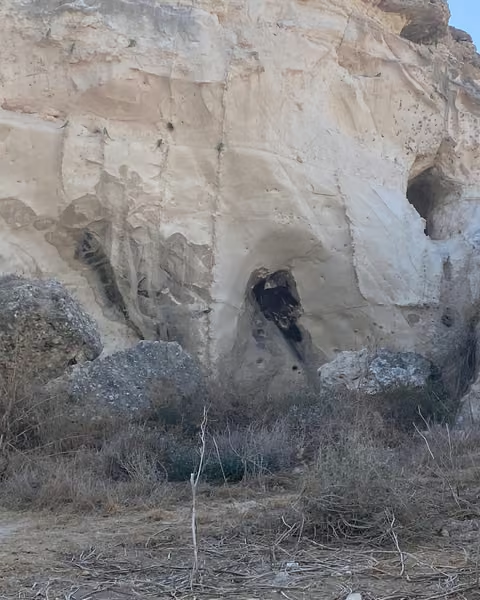
The white cliff of the tel still reads as a wall. Philistia held five cities. This one sat closest to the valley where a shepherd chose five smooth stones. Geography made the dare. The mound still dares you.
Living people
Goliath of Gath. Bronze, shout, daily terror. He is a person the army had already agreed could not be beaten.
David, first the boy in the valley, later the refugee in Gath itself. The same city that bred the giant became a hiding place. The Book does not tidy that.
Achish of Gath, who received a madman and did not know he was housing the next king. Power can be near and still blind.
One thing the eye can verify
The tel still rises over the lowlands. Your eye can verify why a whole army trembled: the mound is a statement. Then look east toward Elah. The giant had a walk. The shepherd had a brook. Distance is the sermon.
Put your hand on the chalk if you can. Then face the valley. The city that produced the shout and the brook that produced the stone share one line of sight. That is the 3D of this fight.
One Hebrew word
קָטֹן katon, small. God delights to use the small against Gath. The word that unlocks this mound is not giant. It is the overlooked one who walked toward it.
One question
Which Gath on your horizon have you already decided is invincible, and who told you that?
A prayer
Lord, the mound looks large. Make us small enough to trust You. Bring down what terrifies the army, and keep us from hiding in the enemy's city without remembering who we are. Amen.
Nearby
- Valley of Elah The brook where a shepherd chose five stones.
- Lachish The fortress of Judah, and the arm that is not flesh.
- Beersheba The well of the oath, where the map of the promise ends and begins.
In The South. Before: Beersheba. Next: Valley of Elah.
Same book: Ashkelon (1 Samuel), Shepherd's Fields (1 Samuel).
More pages: Library.