Library · Lower Galilee & valleys
Cana
Where the best wine came last.
Read aloud: John 2:1-11.
John 2:1-11
The third day, there was a wedding in Cana of Galilee. Jesus’ mother was there. Jesus also was invited, with his disciples, to the wedding. When the wine ran out, Jesus’ mother said to him, “They have no wine.” Jesus said to her, “Woman, what does that have to do with you and me? My hour has not yet come.” His mother said to the servants, “Whatever he says to you, do it.” Now there were six water pots of stone set there after the Jews’ way of purifying, containing two or three metretes apiece. Jesus said to them, “Fill the water pots with water.” So they filled them up to the brim. He said to them, “Now draw some out, and take it to the ruler of the feast.” So they took it. When the ruler of the feast tasted the water now become wine, and didn’t know where it came from (but the servants who had drawn the water knew), the ruler of the feast called the bridegroom and said to him, “Everyone serves the good wine first, and when the guests have drunk freely, then that which is worse. You have kept the good wine until now!” This beginning of his signs Jesus did in Cana of Galilee, and revealed his glory; and his disciples believed in him.
Why here
Cana sits in the hills just north of Nazareth, on the road a Nazareth family would walk to reach the lake.
A village wedding here was a whole town's celebration lasting days, and running out of wine was a family's public shame.
The first sign did not happen in the Temple or on a mountain.
It happened at a neighborhood party, to save a bridegroom from embarrassment.
Heaven's opening move in the Gospel of John was an act of kindness at a family table.
Nathanael, the disciple under the fig tree, was a Cana man.
John 2:1-11 · also: John 21:2
Living people
Mary.
She does not ask her son for a miracle.
She simply tells him the problem, they have no wine, and then gives the servants the best one-line sermon ever preached: whatever he says to you, do it.
The servants.
The only people at the feast who knew where the wine came from.
The ruler tasted, the bridegroom got the credit, and the servants who obeyed held the secret.
Obedience always knows things the head table never learns.
One thing the eye can verify
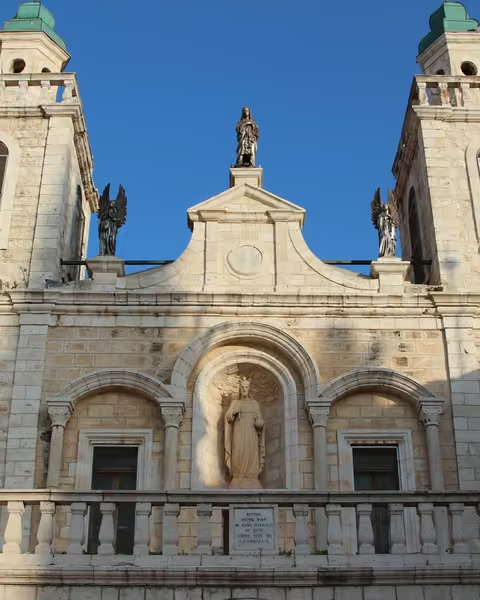
Look at the stone jars in the church here.
Stone, not clay, because stone does not take on impurity under the purity laws.
Six massive vessels for religious washing, each holding a hundred liters and more.
Jesus filled the vessels of ritual to the brim and turned them into joy.
The furniture of the miracle is the sermon.
One Hebrew word
שִׂמְחָה Simcha, joy. The joy of a wedding, the joy commanded at the feasts, the joy this land is always fighting to keep. The first sign was not a rescue from danger. It was a rescue of joy. Heaven takes celebrations seriously.
One question
Whatever he says to you, do it. What is the last thing He said to you that you have not yet done, and what jars are standing empty while you wait?
A prayer
Lord, You saved the joy of a wedding before You ever calmed a storm. Save our joy. Fill the empty jars in our homes to the brim. And when we taste Your goodness late in the story, let us say it out loud: You kept the best wine until now. Amen.
Nearby
- Nazareth The hometown, and the cliff at the edge of it.
- Mount Tabor The mountain apart, where His face changed.
- Nain The village where a funeral turned around at the gate.
In Lower Galilee & valleys. Before: Nazareth. Next: Mount Tabor.
Same book: Tiberias (John), Magdala (John).
Walk this place with me. A private day.