Library · Lower Galilee & valleys
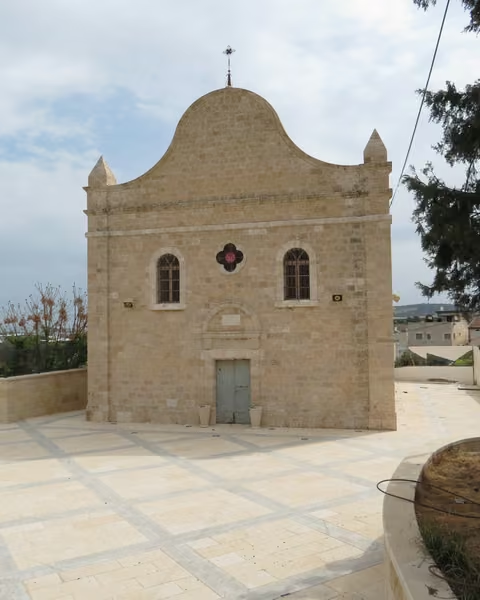
Nain
The village where a funeral turned around at the gate.
Read aloud: 2 Kings 4:32-37, Luke 7:11-17.
2 Kings 4:32-37
When Elisha had come into the house, behold, the child was dead, and lying on his bed. He went in therefore, and shut the door on them both, and prayed to Yahweh. He went up, and lay on the child, and put his mouth on his mouth, and his eyes on his eyes, and his hands on his hands. He stretched himself on him; and the child’s flesh grew warm. Then he returned, and walked in the house once back and forth; and went up, and stretched himself out on him. Then the child sneezed seven times, and the child opened his eyes. He called Gehazi, and said, “Call this Shunammite!” So he called her. When she had come in to him, he said, “Take up your son.” Then she went in, fell at his feet, and bowed herself to the ground; then she picked up her son, and went out.
Why here
Nain clings to the slope of the Hill of Moreh, and just around that same hill sits Shunem, where Elisha raised the Shunammite woman's son eight centuries earlier.
Two funerals interrupted, two sons given back to two mothers, on the same small mountain.
The crowd of Nain knew their Bible and their neighborhood, which is why their cry was so precise: a great prophet has arisen among us.
Geography made the sermon for them.
The old story and the new one stood on the same hill, looking at each other.
Luke 7:11-17 · also: 2 Kings 4:8-37
Living people
The widow.
She has no name and says not one word in the story.
Losing her only son meant losing her protector, her income, her future, everything.
She did not ask Jesus for anything.
He saw her, and that was the whole request.
Jesus, moved.
The text says He had compassion, and then He did the unthinkable: He touched the coffin, taking on impurity by every rule, stopping the bearers mid-step.
Compassion that will not touch is only sentiment.
His had hands.
One thing the eye can verify
Nain is still a small village today, and the ancient burial caves lie just outside it, on the road where the two crowds met: the funeral procession walking out, the Gospel procession walking in.
Stand at the edge of the village and look at that meeting point.
Every funeral walks out of some gate.
Only once did Life Himself happen to be walking in.
One Hebrew word
רַחֲמִים Rachamim, compassion, born from the word rechem, womb. Hebrew mercy is not a feeling in the chest. It is mother-love in the body, the ache of the womb for its child. When the text says He was moved with compassion for a mother, the language itself is a mother.
One question
He stopped a funeral because He saw one exhausted woman. Who around you is walking in a procession of grief, and what would it mean for you to stop the bearers?
A prayer
Lord, You see the widow before she says a word. See ours. Every mother with an empty chair, every family this land has asked to bury a child. Touch what everyone else is afraid to touch. And give the children back to their mothers. Amen.
Nearby
- En Dor The night Saul went looking in the dark.
- Mount Tabor The mountain apart, where His face changed.
- Nazareth The hometown, and the cliff at the edge of it.
In Lower Galilee & valleys. Before: Jezreel. Next: En Dor.
Same book: Megiddo (2 Kings), Dothan (2 Kings).
More pages: Library.