Library · Approaches & Mount of Olives
Nabi Samuel
The lookout of the prophet, and the pilgrims' first sight of the city.
Read aloud: 1 Samuel 7:5-12, 1 Samuel 7:5-11.
1 Samuel 7:5-12
Samuel said, “Gather all Israel to Mizpah, and I will pray to Yahweh for you.” They gathered together to Mizpah, and drew water, and poured it out before Yahweh, and fasted on that day, and said there, “We have sinned against Yahweh.” Samuel judged the children of Israel in Mizpah. When the Philistines heard that the children of Israel were gathered together at Mizpah, the lords of the Philistines went up against Israel. When the children of Israel heard it, they were afraid of the Philistines. The children of Israel said to Samuel, “Don’t stop crying to Yahweh our God for us, that he will save us out of the hand of the Philistines.” Samuel took a suckling lamb, and offered it for a whole burnt offering to Yahweh. Samuel cried to Yahweh for Israel; and Yahweh answered him. As Samuel was offering up the burnt offering, the Philistines came near to battle against Israel; but Yahweh thundered with a great thunder on that day on the Philistines, and confused them; and they were struck down before Israel. The men of Israel went out of Mizpah, and pursued the Philistines, and struck them, until they came under Beth Kar. Then Samuel took a stone, and set it between Mizpah and Shen, and called its name Ebenezer, saying, “Yahweh helped us until now.”
Why here
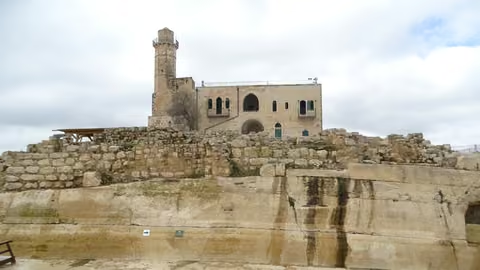
This summit north of Jerusalem is one of the highest points in the whole region, and many identify it with biblical Mizpah, the watchtower, Israel's old assembly ground where Samuel gathered the nation to repent and pray.
Its later name remembers the prophet himself: Nebi Samuel, where tradition placed his tomb.
For medieval pilgrims walking up from the coast this hill had a third name, the Mount of Joy, because from here, for the first time in the whole journey, they saw Jerusalem.
Every road in this land finally turns into this view.
Living people
Samuel.
Hannah's whispered-for son became the man a nation begged: do not stop crying to God for us.
He judged, he interceded, he poured water out like a confession, and while the sacrifice was still burning, heaven answered with thunder.
The people at Mizpah.
They came defeated and frightened, and their whole strategy was one intercessor and one honest sentence: we have sinned.
It was enough.
One thing the eye can verify
Climb to the roof of the fortress-shrine and turn south.
There it is: Jerusalem, spread on her hills, the view that made crusaders fall to their knees and name this the Mount of Joy.
Then remember Samuel's stone: Ebenezer, the stone of help, Yahweh helped us until now.
Every pilgrim who reaches this lookout is standing on their own Ebenezer.
You made it this far because He helped you this far.
One Hebrew word
מִצְפָּה Mitzpa, watchtower, lookout. The place where you stand guard and the place where you finally see. On this hill the two meanings become one: the nation's old watchtower is the pilgrim's first sight of the city of God.
One question
Yahweh helped us until now, said Samuel, setting the stone. Stop and count: what would be written on your Ebenezer stone today?
A prayer
Lord, gather us like Mizpah. We pour out our hearts like water and say it plainly: we have sinned, and You have helped us until now. Set a stone in us that remembers. And from this lookout, let us see Your city the way the pilgrims saw it, with joy. Amen.
Nearby
- Gibeon Where the sun stood still, and a young king asked to hear.
- Ein Karem The spring of the vineyard, where two mothers met.
- Gethsemane The oil press, where the will of the Son was pressed.
In Approaches & Mount of Olives. Before: Bethphage. Next: Gibeon.
Same book: Shepherd's Fields (1 Samuel), Valley of Elah (1 Samuel).
Walk this place with me. A private day.